Meniscus Surgery
Treatments
- Robotic Knee Replacement
- Total Knee Replacement
- Partial Knee Replacement
- Revision Knee Replacement
- Hip Replacement Surgery
- Shoulder Replacement Surgery
- Keyhole (Arthroscopic) Surgery
- Knee Arthroscopy
- Shoulder Arthroscopy
- ACL Reconstruction
- PCL Reconstruction
- Meniscus Surgery
- Rotator Cuff Repair
- Sports Injury Treatment
- Ligament Injury Treatment
- Fracture Treatment
- Trauma & Emergency Orthopaedic Care
- Patient-Focused Recovery
- Knee Pain Treatment
- Hip Pain Treatment
- Shoulder Pain Treatment
- Joint Preservation
- Non-Surgical Orthopaedic Treatment
- Orthopaedic Rehabilitation
About Dr. B.A. Gopala Krishna
Expert care for robotic knee replacement, arthritis, fractures, and sports injuries.
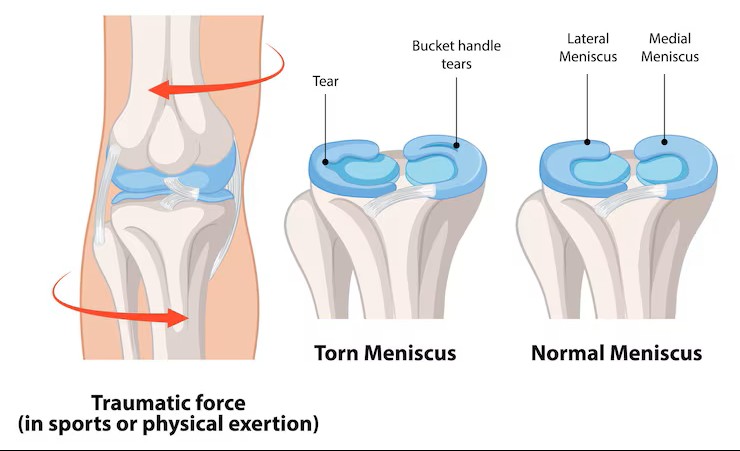
Meniscus Surgery at Dr. G.K's Advanced Bone & Joint Centre
Meniscus Surgery is offered for patients dealing with meniscus tears causing knee pain, swelling, locking, or catching. At Dr. G.K's Advanced Bone & Joint Centre in Banashankari, Bengaluru, Dr. B.A. Gopala Krishna evaluates each patient clinically and reviews the required imaging before recommending a treatment plan.
The treatment approach focuses on repairing or trimming the damaged meniscus depending on tear pattern, age, and tissue quality. Surgery is advised only when it is medically appropriate; many patients may benefit from medicines, physiotherapy, bracing, injections, activity modification, or guided rehabilitation before surgery is considered.
Treatment Approach
Every plan is personalized based on pain level, age, activity needs, joint condition, bone quality, injury pattern, and overall health. The goal is to reduce pain, restore useful movement, improve stability, and help the patient return safely to daily activities.
-
Meniscus tear pattern evaluation
-
Meniscus repair whenever suitable
-
Arthroscopic treatment through small incisions
-
Rehabilitation for knee motion and strength
When Should You Consult an Orthopedic Specialist?
You should seek an orthopedic opinion when mechanical knee symptoms continue after twisting injury, sports injury, or degeneration. Early evaluation can help identify the exact cause and prevent avoidable worsening of pain, stiffness, instability, or disability.
Recovery and Follow-Up Care
Recovery varies for every patient. Dr. Gopala Krishna and the care team guide patients on medicines, movement precautions, physiotherapy, follow-up visits, and safe return to work, walking, sports, or routine activity based on the treatment performed.
What Happens During Your Consultation?
A consultation for meniscus surgery begins with a detailed discussion about pain location, stiffness, swelling, walking tolerance, work demands, sports goals, previous injuries, and earlier treatment. Dr. Gopala Krishna examines movement, strength, stability, alignment, and tender areas so the diagnosis is based on both symptoms and clinical findings.
When required, X-rays, MRI, CT scan, blood tests, or other investigations are reviewed to understand the condition clearly. The findings are explained in simple terms, including what can improve with non-surgical care, what may need a procedure, and what recovery normally involves for the selected treatment option.
Personalized Care Plan
The care plan is built around comfort, mobility, safety, and long-term joint function. Patients receive practical guidance on medicines, exercise, physiotherapy, weight-bearing, braces or supports, injection options, activity changes, and follow-up timing. If surgery is recommended, the reason for surgery, expected benefit, hospital process, rehabilitation milestones, and precautions are discussed before the patient decides.
-
Detailed diagnosis with clinical examination and imaging review
-
Clear explanation of non-surgical and surgical treatment choices
-
Recovery guidance for walking, work, exercise, and daily routines
-
Follow-up plan to track pain relief, movement, strength, and function
Recovery Milestones We Track
Follow-up care is used to monitor pain control, wound or swelling status when relevant, range of motion, muscle strength, balance, walking pattern, stair comfort, and confidence with routine activity. The aim is steady recovery without rushing the joint, tendon, ligament, or bone beyond what is safe for that stage of healing.
Who is suitable for meniscus Surgery?
Suitability depends on symptoms, examination findings, imaging results, age, activity needs, and overall health. A direct consultation is required before deciding the right treatment.
Is surgery always required?
No. Surgery is recommended only when it is clearly needed. Many orthopedic conditions can be treated with medication, physiotherapy, bracing, injections, activity changes, and follow-up care.
What tests may be needed?
Depending on the condition, X-rays, MRI, CT scan, blood tests, or other investigations may be advised to confirm the diagnosis and plan treatment safely.
How can I book an appointment?
Call +91 92416 73637 or +91 86607 45251, email drgkbonejoint@gmail.com, or visit Dr. G.K's Advanced Bone & Joint Centre at Banashankari 2nd Stage, Bengaluru.